

What South Texas can expect from its first human milk bank
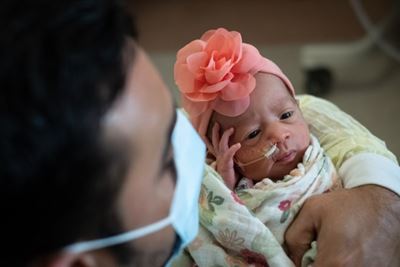
Giving back often begins with recognizing a need and choosing to act. For University Health Foundation donors, that commitment is helping to bring a new resource to South Texas: The University Health Milk Bank generously funded by the John R. & Greli N. Less Charitable Trust, which will provide essential nutrition to at-risk infants during the earliest and most critical moments of life.
As a new era of growth in our health system continues, the University Health Milk Bank is preparing to launch as another vital new service for our community. Backed by philanthropic investment and guided by a bold strategic vision, the Milk Bank is well positioned to broaden its reach and transform the lives of more families in the years ahead.
“Having a local milk bank matters because it increases access, it shortens the distance that milk has to travel and also helps ensure that medically fragile infants in our community can receive the support that they need,” University Health Milk Bank Director Maciel Ugalde said.
The University Health Milk Bank will be a state-of-the-art facility that localizes the collection, pasteurization, and distribution of donor human milk to support vulnerable premature infants and their mothers. The milk bank will provide safe, pasteurized milk while a mother's own milk supply is being established or when she is unable to produce enough milk. By ensuring that every infant has access to safe, evidence-based nutrition regardless of maternal lactation challenges, the milk bank will help reduce complications associated with prematurity and improve health outcomes for the region's most vulnerable newborns.
With a total project budget of $5.6 million, the Foundation has already secured more than $1.3 million in support from generous donors for this project, including contributions from donors like the John R. & Greli N. Less Charitable Trust, Myra Stafford Pryor Trust, Frost Bank Charitable Foundation, Charity Ball Association, Nancy Smith Hurd Foundation and Blue Cross Blue Shield.
But, as it moves closer to opening, Maciel and her team are now focused on building the programs, partnerships and community connections that will make this resource sustainable for the future.
Initially, the Milk Bank will serve University Health Women’s & Children’s Hospital patients, allowing the team to establish reliable operations and ensure families receive the highest level of care and support. During the first year, it also plans to process more than 10,000 ounces of donated human milk, recruit approximately 100 active donors and achieve accreditation through the Human Milk Banking Association of North America (HMBANA), which sets national standards for nonprofit milk banks.
Beyond the initial launch, the Milk Bank’s long-term vision is to expand access throughout the region. Over the next three to five years, the plan is to establish additional donor milk drop-off locations, particularly in communities where families may experience barriers to accessing resources. The team will also strengthen partnerships with organizations such as Women, Infants & Children; Healthy Start; home visiting programs; and local maternal health organizations to connect more families with support.
Maciel said that the University Health Milk Bank is expected to make a meaningful difference in the landscape of infant nutrition and neonatal care in San Antonio. It will become the city’s first milk bank and only the third milk bank in Texas, strengthening the state’s overall donor milk network.
For many families across the region, this means greater access to a resource that may have previously been limited by cost, location or availability.
While outcomes will continue to be tracked as the program grows, donor human milk is expected to support improved feeding, help reduce certain health complications among premature infants, and contribute to shorter hospital stays for some babies requiring intensive care. The University Health Milk Bank is expected to open in the spring of 2027.