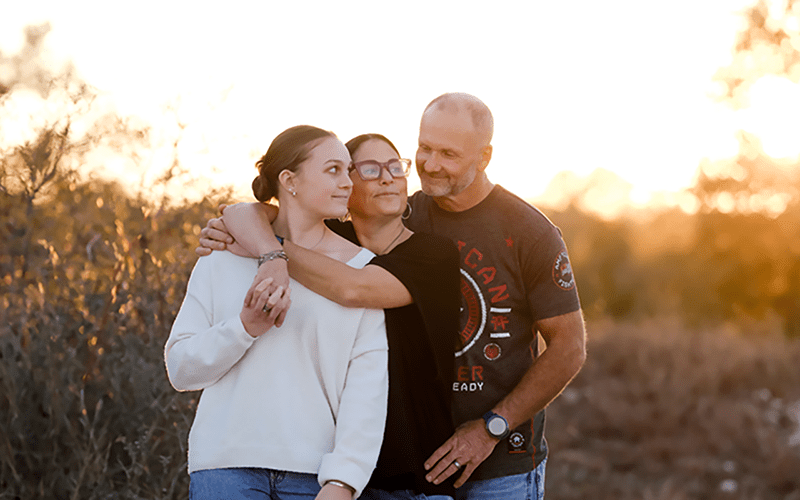
When Connie Wan was diagnosed with breast cancer, she never imagined how much it would change her life. With support from her family, friends and University Health colleagues, she faced chemotherapy, surgery and the challenges of treatment.
Today, Connie looks back on that time with gratitude. She continues to work as a registered nurse and celebrate new milestones with her family. She also helps other healthcare professionals find support through Breast Buddies, a group she created after her diagnosis.
“I feel I have conquered and stomped out my cancer,” Connie said.
Her story also offers an important reminder: Knowing the signs of breast cancer can help you take an active role in your breast health. So can learning your family history and staying up to date on recommended screenings.
Recognizing the Signs of Breast Cancer
A lump is a common sign of breast cancer, but it is not the only change to watch for. Breast cancer can also cause changes in the breast or nipple that are easy to miss.
Possible symptoms of breast cancer include:
- A lump in the breast or armpit
- Changes in breast size or shape
- Dimpling, puckering or changes in breast skin
- Red, swollen or scaly skin on the breast or nipple
- A nipple that turns inward
- Nipple discharge
- Breast or nipple pain
- Swollen lymph nodes near the armpit or collarbone
Not everyone with breast cancer has symptoms. A routine mammogram may find changes before a person notices anything unusual.
If you notice a change in your breasts, talk with your healthcare provider. Don't wait for your next screening appointment to bring up a new concern.
Understanding Your Breast Cancer Risk
Anyone can develop breast cancer, but some factors increase the risk. These include a family history of breast or ovarian cancer, dense breasts or a past breast cancer diagnosis. Inherited changes in genes such as BRCA1 and BRCA2 can also raise the risk.
For Connie, family history helped her understand her diagnosis and care options.
Her mother was diagnosed with breast cancer in her 70s. After her own diagnosis, Connie chose genetic counseling and testing. She learned she had an inherited change, called a mutation, in her BRCA2 gene.
Connie’s daughter also chose genetic counseling and testing. She tested negative for the BRCA2 mutation found in her family. The result helped ease the family’s concerns.
“It was very worrisome for her because she was thinking, ‘Do I need to have a prophylactic mastectomy because both my mom and grandma had the cancer?’ but she doesn’t have the gene,” Connie said.
Genetic counseling can help people understand inherited breast cancer risk. It can also help them explore screening, prevention and care options. If breast or ovarian cancer runs in your family, ask your healthcare provider whether genetic counseling may be right for you.
Breast cancer screening recommendations can vary based on personal and family history. People at average risk are generally advised to start yearly screening mammograms at age 40. Those at higher risk may need more screening tests or an earlier start.
Connie’s Breast Cancer Journey: Treatment, Surgery and Recovery
Connie was diagnosed with triple-negative breast cancer. She worked with her care team to understand her options and plan the next steps in her care.
Connie received chemotherapy before surgery. She also learned more about her inherited risk and discussed her options with her care team.
After treatment, Connie chose a double mastectomy, surgery to remove both breasts. She also had a hysterectomy, surgery to remove the uterus. Her BRCA2 mutation, family history and wish to lower her future cancer risk shaped her decisions.
Connie also faced unexpected health challenges. After chemotherapy, she developed adrenal insufficiency. This condition affects the body’s ability to make a hormone called cortisol. She now takes medicine to manage it and continues to see her doctors for follow-up care.
Today, Connie sees her oncologist, a doctor who treats cancer, every six months.
Treatment and recovery were challenging, but she says the support she received made a lasting difference.
Life After Breast Cancer
When Connie first shared her story, she hoped to see her daughter get married and meet her future grandchildren.
Since then, she's watched her daughter walk down the aisle and is looking forward to becoming a grandmother.
Those milestones mean even more after everything she's experienced.
Connie continues to work at University Health as a registered nurse and patient care coordinator. She works in the post-anesthesia care unit, where patients recover after anesthesia.
Her experience has changed how she connects with people facing cancer. When patients or colleagues have breast cancer, she reaches out to offer support.
She reminds them that recovery takes time and that life can look different after treatment.
“It takes a year of your life,” Connie said. “But then it will get better. You just have to have the patience and just have a positive attitude.”
Breast Buddies Support Group
During treatment, Connie learned firsthand how much a caring community can help someone facing cancer.
Her University Health colleagues found several ways to support her. They formed a group called Connie’s Cheerleaders and shaved their heads to show support before she began chemotherapy. They also brought her gifts throughout treatment.
She never forgot that support.
After her diagnosis, Connie wanted other University Health and UT Health San Antonio team members to find that same support. She created Breast Buddies, a monthly breast cancer support group at University Health.
The group welcomes healthcare professionals and other staff, including doctors, nurses and environmental services team members. At each meeting, a guest speaker shares information and resources for team members affected by breast cancer.
“Breast Buddies is my way of giving back to the staff of University Health and UT Health for everything they did for me,” Connie said. “Our group consists of wonderful women and men who understand what you are going through.”
For Connie, Breast Buddies is about helping people feel less alone while facing a difficult diagnosis.
“People need people,” she said. “This is a terrible diagnosis to go through alone.”
Support is available for patients, too. In addition to Breast Buddies for team members, University Health offers a breast cancer support group for patients.
Take Charge of Your Breast Health
Connie’s story is a reminder to pay attention to breast health at every stage of life. Know what is normal for your body and learn your family history. Following recommended screening guidelines is also an important step toward finding cancer early.
Here are a few steps you can take:
- Know what is normal for your breasts. Pay attention to changes in their size, shape, skin or appearance.
- Talk with your provider about your risk. Share your personal and family history of breast or ovarian cancer.
- Stay up to date on mammograms. Ask your provider when to start screening and how often you need it based on your risk.
- Don't ignore changes. Contact your healthcare provider if you notice a lump or another unusual breast change, even if you recently had a normal mammogram.
The University Health Breast Center offers breast care, including screening, tests to diagnose breast cancer, treatment and support.
To learn more about mammograms or schedule a screening, call 210-644-2900.
Are you due for a breast cancer screening? Schedule an appointment with the University Health Breast Center.
Call 210-644-2900.