

University Hospital Patient Guide
Dear Patient,

Welcome to University Hospital. We appreciate the trust you are placing in us and will do everything we can to make your stay as comfortable as possible. We’ve created this patient guide to help you and your family be informed of services, programs and resources you might find helpful while you’re in the hospital or after you go home.
Good communication is very important for your care and safety, and our doctors and nurses are committed to keeping you informed and answering any questions you may have. Please don’t hesitate to let a member of your care team know if you need assistance or have any concerns.
If you don’t already have a MyChart account, we encourage you to sign up today and download the MyChart app to your smartphone. While you are here at the hospital, MyChart will enable you to see any test results on your phone as soon as they are entered into your medical record. You will also be able to see and manage future appointments at all University Health locations, order refills for medications, message your doctors and so much more to help you manage your health.
After you go home, you will be asked to complete a survey about your experience. Your feedback is very important to us. It is used to help us recognize staff members who go above and beyond, and to identify opportunities for improvement, so please take time to answer these questions. In the meantime, if there is anything we can improve during your stay, please let us know right away.
Thank you for choosing University Health.
Our values are patient centered. Our patient care will be:
- High quality and compassionate above all.
- Attentive, kind and helpful without exception.
- Wise in the use of resources.
About Us
University Health plays a unique role in Bexar County and South Texas. We are proud to be a resource for community and surrounding areas as we:
- care for the most critically ill and seriously injured adults and children as a Level I trauma center
- educate the next generation of medical providers as an academic medical center
- serve the region as a referral hospital for complex medical and surgical care
In partnership with UT Health San Antonio, we are consistently recognized as a leader in advanced treatment options, new technologies and clinical research.



University Hospital was designated as a High Performing Hospital in multiple specialties and procedures/conditions for 2024 by U.S. News & World Report. Since 2001, U.S. News has consistently ranked University Hospital among the best hospitals in Texas and the San Antonio region.
We are Bexar County and South Texas’ first health system to earn Magnet status. Only about 6 percent of U.S. hospitals have earned this prestigious designation from the American Nurses Credentialing Center. Magnet hospitals offer patients reassurance they are being cared for by a team with a proven track record for providing excellent care and positive outcomes for their patients.
As one of the seven Texas members of America’s Essential Hospitals, we provide a complete range of medical services to the community. We play a critical role in regional disaster response, provide training to students in more than 50 healthcare professions, conduct research and help protect the public health.
Gardens
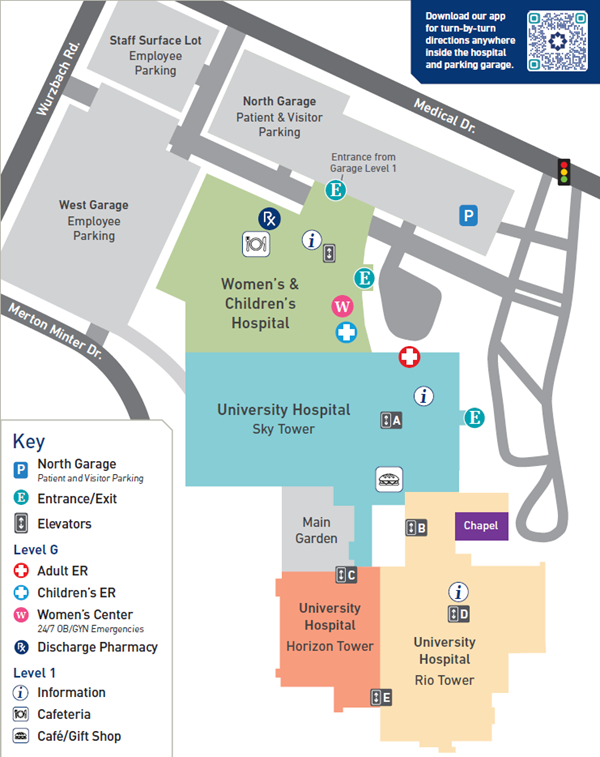
We have two outdoor areas for dining, relaxation, or just a place to go if you need some fresh air. Please feel free to ask any staff member to guide you to either of our gardens.
Spiritual Care

University Health provides professional, clinically trained chaplains who understand the challenges that come with being in the hospital. We believe that high quality healthcare supports the whole person to include their mind, body, and spirit.
Our chaplains honor individuals of all faiths or no faith, and people from all walks of life. They are available 24/7 by calling 210-743-3300 or the hospital operator. For quiet reflection or prayer, our Peveto Center is available 24/7 on the level 1 of Rio Tower.
Sky Bistro
Serving Starbucks coffee, pastries, daily soups, and made-to-order items, Sky Bistro also offers snacks and meals-to go including fresh sandwiches, salads and sushi. Flowers, balloons and gifts are also sold here.
ATM
Main Lobby: Sky Tower, Level 1, behind the Information desk
DINING
Cafeteria: Women's & Children's Hospital, Level 1
Sky Bistro: Sky Tower, Level 1 Lobby
GARDENS
Main Garden: Sky Tower, Level 1, near C elevators
Aziz Roof Garden: Sky Tower, Level 10, A elevators
GIFT SHOP
Inside Sky Bistro: Sky Tower, Level 1 Lobby
MEDICAL RECORDS
Rio Tower, Level 1, near D elevators
PHARMACY
Women's & Children's Hospital, Level G
BIBLIOTECH - ONLINE LIBRARY KIOSK
Sky Tower, Level 1, near A elevators
PATIENT RELATIONS/ PATIENT ADVOCATES
Rio Tower, Level 1, near B elevator
PRAYER/MEDITATION
Peveto Center for Pastoral Care, Rio Tower, Level 1, near B elevator
The cashier's office is located on level G (SL) of Rio Tower - use the D elevator.
Download Our Mobile App
During Your Stay
YOUR ROOM
Each patient is provided a private room to ensure a comfortable and quite environment in which to heal. Your nurse will help you adjust your bed and provide additional blankets or pillows. We also provide plenty of space and furniture to accommodate guests and loved ones who wish to visit. Our staff will clean your room daily. If your room needs more attention, please ask your nurse to contact housekeeping or maintenance staff to address your requests.
CALLING YOUR NURSE
Your nurse will stop by your room about every hour to check on you. You may also press the call button attached to your bed at any time and your needs will be addressed by a member of your care team right away. At the start and end of each shift, your nurses will come into your room to discuss your condition and plan of care for the next shift. You may also be visited by a nurse manager to make sure that you are getting everything you need.
YOUR HEALTHCARE TEAM
Your care is being managed by an attending physician. You will also be seen by other members of that physician’s team or other specialty physicians during your stay. Other professionals who may make up your health care team are:
- Nurse technicians may take vital signs or provide other assistance to our Registered Nurses.
- Physical therapists, occupational therapists and/or speech therapists may be asked to consult by your physicians to help you get ready to continue your recovery after you leave our hospital.
- Case managers are nurses who help you with discharge planning, transfers to other facilities, arranging for home health care or medical equipment.
- Social workers can help with resources and referrals for funding and discharge needs.
- Chaplains are available to help you and your loved ones with any emotional or spiritual needs.
One of the primary missions of University Health is to teach the next generation of healthcare professionals.
During your visit, you may have students observing or providing part of your care under the supervision of their instructors, attending physician, or other employees qualified to do so. We appreciate your patience and guidance for these students. This experience helps them become the expert healthcare providers that we will need in the future.
Ordering Your Meals
Hospital patients can order meals through our Room Service dining program between 7:00 a.m. and 7:00 p.m. by dialing ext. 82410 from the telephone in your room. Room Service operators will make sure your items are okay with your doctor and your food will be delivered within 45 minutes. If you have any questions or concerns, please call the patient food services manager at 210-358 2420.
Making Calls
To make a local call from patient care rooms, dial 9, then the 10-digit telephone number.
To make a long-distance call, dial 0 for the operator.
To promote rest and healing, incoming calls to patient rooms between 9 p.m. and 7 a.m. are routed to the hospital operator.
Volunteer Services
Phone Directory
Free Wireless Internet Service
Television Channel Guide
Pet Therapy
Visitors
University Health welcomes the presence and participation of loved ones and recognizes the therapeutic role they play in a patient’s healing. Visitors identified by a patient are permitted in most areas of the hospital 24/7.
Each patient room has furniture that can accommodate one overnight visitor and the patient’s nurse can provide a pillow and blanket upon request. Guest food trays are available for purchase.
Guidelines for Visitors
Patients and their loved ones are encouraged to work with our doctors, nurses and staff to establish a visitor plan in the best interest of the patient. Please review the following guidelines:
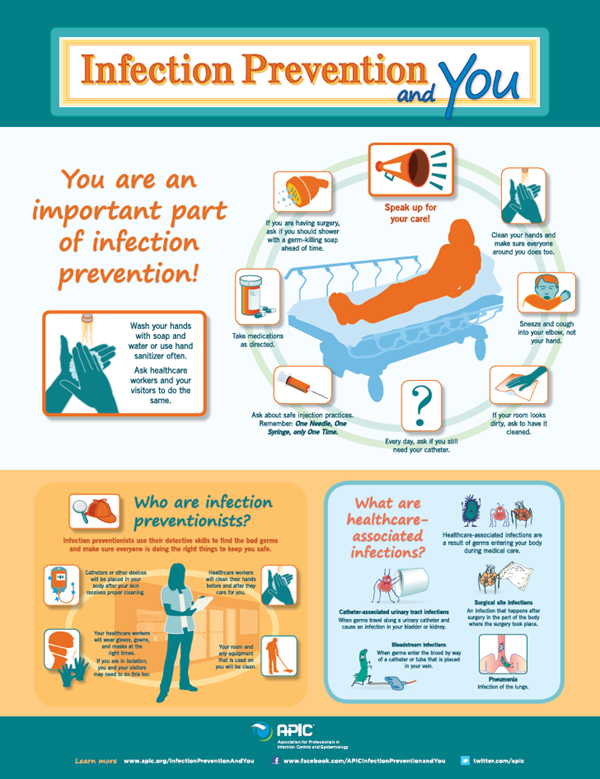
- All visitors should practice good hand hygiene. Hands should be washed or sanitized before and after all patient contact. For your convenience, hand sanitizing gel is located outside each patient room and throughout the hospital.
- For your protection, if the patient’s room has “isolation” signage posted outside the door, please check with a nurse for instructions before entering the room.
- Always speak to the nurse before bringing any food for patients.
- If you think you may be sick, do not visit the patient until you are sure you are well.
- Smoking or vaping is not allowed on any University Health campus.
The number of visitors and length of visitation may be limited in specific care settings, such as intensive care units, pre-operative areas, surgical suites, post anesthesia recovery areas, and psychiatry units. Patients and visitors will be notified of these limits when they are admitted to one of these areas.
We respect the patient’s right to decide who visits and for how long at all times during their stay. Visitors may occasionally be asked to step out of the patient’s room so that staff can care for the patient.
Visitor restrictions can be put in place as needed to protect the health and safety of a patient for reasons including:
- Patient’s request
- Patients in custody of law enforcement
- Infection control concerns
- Intoxication or unruly behavior
- Interference with patient care, privacy, or rest
For privacy reasons, visitors may not photograph or record patients, staff or other visitors without permission.
Nearby Hotels
In the area
9411 Wurzbach Road, 78240
210-691-9550
866-691-9550
4803 Manitou Drive, 78228
210-684-9966
800-528-1238
5130 Vantage Way, 78249
210-448-5400
800-4CHOICE
8585 Marriott Drive, 78229
210-614-7100
800-706-8869
6010 NW Loop 410, 78238
210-465-1250
11790 IH-10 West, 78230
210-696-7922
9806 IH-10 West, 78230
210-561-2510
11101 IH-10 West, 78230
210-561-9058
102 Spencer Lane, 78201
1-888-465-4329
10950 Laureate Drive, 78249
210-691-1103
4323 Spectrum One, 78230
210-696-5400
6901 IH-10 West, 78213
210-738-1100
4303 Hyatt Place Drive, 78230
210-561-0099
800-833-1516
4431 Horizon Hill Blvd, 78229
210-525-8090
800-SLEEPLQ
(Transportation available within Medical Center)
7500 Louis Pasteur Drive, 78229
210-616-0030
800-4MOTEL-6
(Transportation available within Medical Center)
9400 Wurzbach Road, 78240
210-593-0013
4 Piano Place
San Antonio, TX 78228
210-684-8606
4441 Fredericksburg Road
San Antonio, TX 78201
210-733-7154
5336 Wurzbach Road
San Antonio, TX 78238
210-520-0888
7719 Louis Pasteur Court
San Antonio, TX 78229
210-349-3100
Your Safety
Patient safety is our first priority. Everyone plays a vital role in providing quality patient care, including our staff, patients and visitors. Here are a few things you can do to help us keep you safe:
- If you have valuables with you, please give them to a friend or family member for safekeeping or ask your nurse to secure your items in our admissions closet. Your valuables will be returned to you upon discharge.
- Ask questions and make sure you understand the answers. It can be helpful to have a relative or friend with you to help with this.
- Make sure your doctor knows all the medicines you take, including nonprescription medicines and supplements. Tell us about drug allergies you have and ask about side effects of any new medicines.
- Ask for identification of everyone who enters your room.
- Ask anyone who enters your room to wash their hands.
- If you need help standing or getting to the bathroom, call for a nurse.
- Express any concerns you have about your care right away, so that they can be addressed
Falls are a leading cause of injury in hospitals. Your health and hospital experience is our primary concern. Also, your family/friends are welcome to stay and assist with your care during your hospitalization. Remember, we are here for you and only seconds away.
WHAT TO DO WHILE IN THE HOSPITAL
- Use your call light to alert caregivers
- If you use glasses or hearing aids, wear them
- Wear non-skid shoes that fit
- Use your walker, crutch or brace
PATIENT ROOM SAFETY
- We will check on you every hour
- We will place your personal items within easy reach
- We will keep the bed at its lowest position
- We will make sure your room is well lit
- We welcome your family to stay with you during your hospitalization
BATHROOM SAFETY
- Use handrails located around the toilet, sink and shower
- Turn on the lights
IF YOU FALL
- Stay calm and use call light or shout for help
- Stay where you are and wait for nurse to arrive
- Are dizzy getting up from bed or chair
- Can’t see well or if it’s too dark
- Are unsure if you’re able to get up on your own
- Need to use bathroom and/or feel weak
Patient Rights & Responsibilities
This document serves to inform you of your rights and responsibilities as a patient at University Health. If you are unable to exercise any or all of these rights, Texas law requires that your guardian, next of kin or legally authorized representative may exercise these rights on your behalf.
University Health prohibits discrimination based on age, race, ethnicity, religion, culture, language, physical or mental disability, socioeconomic status, sex, sexual orientation, and gender identity or expression.
You have the right, within the limits of law, to:
- Be informed of your rights as a University Health patient, including information about our patient rights policy;
- receive information in a manner you can understand about your health status, diagnosis, prognosis, treatment and services, and outcomes of treatment and services;
- effective communication in a manner tailored to your age, language, and ability to understand;
- receive information about participation in research, investigation, or clinical trials;
- receive information about the person(s)responsible for and/or providing your care, treatment, or services;
- participate in decisions about care, treatment, and services, including those associated with end of life;
- give or withhold informed consent;
- request or refuse care, treatment or services;
- designate a representative to receive information about your health status and make decisions on your behalf;
- create advance directives and have hospital staff and practitioners who provide care comply with these directives;
- have family and physician notified promptly of your admission to, or discharge or transfer from, the hospital;
- be informed of any process to automatically notify your established primary care practitioner/group of your admission to the hospital;
- designate a support person to be present throughout your stay, as long as the safety, care or rights are others are not compromised;
- receive visitors whom you designate and deny consent for visitors at any time during your hospitalization;
- receive dignified and respectful treatment in an environment that preserves your dignity and contributes to a positive self-image;
- receive care in a safe setting and is respectful of cultural, psychological, spiritual, and personal values, beliefs, preferences, and personal dignity;
- be free from all forms of abuse, neglect, exploitation, and harassment;
- security and personal privacy;
- be free from restraints and/or seclusion in any form that are not medically necessary;
- access religious or other spiritual services;
- access protective and advocacy services;
- access interpreter and translation services at no cost to you;
- access, request amendment to, and receive information on disclosures of your health information contained in your medical records within a reasonable period of time; and
- prompt resolution of complaints and grievances;
In the comprehensive medical rehabilitation setting, a minor is entitled to:
- appropriate treatment in the least restrictive setting available;
- not receive unnecessary or excessive medication;
- an individualized treatment plan and to participate in the development of that plan;
- a humane treatment environment that provides reasonable protection from harm and appropriate privacy for personal needs;
- separation from adult patients; and
- regular communication between the minor patient and the patient’s family
You have the responsibility to:
- provide, to the best of your knowledge, accurate and complete information about your health history, current symptoms, medications, allergies, current address, phone number, emergency contacts, health insurance, and all other information that facilitates your care, treatment, or services;
- report unexpected changes in your condition to your care team;
- ask questions when you do not understand the plan of treatment or care decision;
- know and follow the treatment plan prescribed by your medical team;
- make and keep appointments and notify staff when you are unable to do so;
- support mutual consideration and respect by maintaining civil language and conduct during interactions with staff and practitioners;
- respect the rights of visitors, staff, and other patients, including another patient's rights to privacy;
- follow all University Health rules and state laws and regulations pertaining to safety, smoking, and general conduct;
- respect the property of other persons and of University Health and;
- promptly meet financial commitments to University Health.
For more information about patient rights, policies, resolution of complaints or to submit compliments, please contact the Patient Relations department at 210-358-0600. You have the right to file a grievance with the Texas Department of State Health Services regardless of whether you have used the University Health grievance process. The Texas Department of State Health Services Information/Complaint Hotline is: 1-888-963-7111, ext. 2150 Department of State Health Services Attn: Customer Service Coordinator P.O. Box 149347, MC-1913 Austin, Texas 78714-9347
Notice of Non-Discrimination
Discrimination is against the law. University Health complies with applicable federal civil rights laws and does not discriminate on the basis of race, color, national origin, age, disability, or sex.
University Health does not exclude people or treat them differently because of race, color, national origin, age, disability, or sex. University Health values the diversity and inclusion of our patients, their visitors, employees, physicians, volunteers, students and others.
LANGUAGE ASSISTANCE
University Health provides free aids and services to people with disabilities to communicate effectively with us, such as:
- Qualified sign language interpreters
- Written information in other formats (large print, audio, accessible electronic formations, other formats)
Provides free language services to people whose primary language is not English, such as:
- Qualified interpreters
- Written information in other languages
If you feel Language Assistance Services have been denied, please call the Patient Relations Department at 210-358-0600.
If you believe that University Health has failed to provide these services or discriminated in another way on the basis of race, color, national origin, age, disability, or sex, you can file a grievance with:
University Health Patient Relations Department
4502 Medical Dr., MS# 126-1
San Antonio, Texas 78229
Phone: 210-358-0600
Fax: 210-358-4460
Relay Texas: 711
Email: Patient.Relations@uhtx.com
You can also file a civil rights complaint with the U.S. Department of Health and Human Services, Office for Civil Rights, electronically through the Office for Civil Rights Complaint Portal, available at https://ocrportal. hhs.gov/ocr/portal/lobby.jsf, or by mail or phone at:
U.S. Department of Health and Human Services
200 Independence Avenue, SW
Room 509F, HHH Building
Washington, D.C. 20201
1-877-696-6775, 800-537-7697 (TDD)
Notice of Privacy Practices
University Health is committed to keeping patient information private. It is essential for everyone to be respectful of the privacy of patients at all times. In support and consideration of privacy, please do not photograph or record patients, staff or visitors without permission. Anyone using social media is also encouraged to be responsible when posting information, particularly about sensitive topics such as a patient’s diagnosis or prognosis.
THIS NOTICE DESCRIBES HOW MEDICAL INFORMATION ABOUT YOU MAY BE USED AND DISCLOSED AND HOW YOU CAN GET ACCESS TO THIS INFORMATION. PLEASE REVIEW IT CAREFULLY.
If, at any time, you have questions about information in this Notice or about our privacy policies, procedures or practices, you may contact the University Health HIPAA Officer at 210-743-6540 or HIPAAOfficer@uhtx.com.
Understanding Your Health Record/Information
This Notice describes the practices of the University Health with respect to your protected health information created while you are a patient at University Health.
We understand that your medical information is personal and we are committed to protecting your medical information and keeping you informed about your health information rights.
This Notice will tell you about the ways in which we may use and disclose medical information about you. It also explains your rights and our legal duties regarding the use and disclosure of medical information.
Your Health Information Rights
You have several rights with respect to your medical information. This section briefly mentions each of these rights.
YOU HAVE A RIGHT TO:
- Request a paper copy of this Notice or download a copy at www.UniversityHealth.com.
- Inspect and receive a copy of your health record in either paper or electronic form.
- Receive communications about your health information by alternative means (cell phone instead of letter) or at alternative locations (work instead of home). We will accommodate reasonable requests.
- Request that we limit the use and disclosure of your medical information for treatment, payment, and healthcare operations. We will accommodate reasonable requests.
- Request that we restrict disclosures of your health information to persons, including family members, involved with your care and as provided by law. We will accommodate reasonable requests.
- Request, in writing, an amendment of your health information you believe to be incorrect or incomplete, as provided by law. We will notify you if we are unable to grant your request to amend your health record.
- Appoint a personal representative who will have authority to exercise your rights and make choices about your health information.
- Obtain an accounting of certain disclosures of your health information as provided by law.
- Be notified of any breaches of unsecured protected health information as provided by law.
- Opt-out of receiving fundraising activities. Please contact the University Health Foundation at 210-358-9860 to opt-out of fundraising communications.
- Restrict the disclosure of health information to a health plan, pertaining solely to a health item or services for which the individual has paid University Health in full.
- Restrict the use and disclosure of psychotherapy notes, marketing, and the sale of your protected health information. This information may be released only upon your written authorization.
You may exercise your rights set forth in this Notice by providing a written request to the University Health Medical Records Department, 4502 Medical Dr., San Antonio, Texas, 78229, by phone at 210-358-3532 or by e-mail at: medical.records@uhtx.com.
Our Responsibilities
In addition to the responsibilities set forth above, we are also required to:
- Maintain the privacy of your health information.
- Provide you with a copy of this Notice.
- Abide by the terms of this Notice.
- Notify you if we are unable to agree to a requested amendment or restriction.
- Restrict the sale of your health information, unless authorized by you.
- Accommodate reasonable requests you may have to communicate health information by alternative means or at alternative locations.
- Disclose your health information without your written authorization (signed permission), except as described in this Notice or permitted by law.
We reserve the right to change our practices and to make the new provisions effective for all protected health information we maintain, including information created or received before the change. Should our practices change, we are not required to notify you, but we will have the revised notice available for you to request at any University Health site and on this website: www.UniversityHealth.com.
Examples of Disclosures of Health Information for Treatment, Payment, Healthcare Operations and as Otherwise Allowed by Law
The following categories describe different ways that we use and disclose medical information. Not every use or disclosure in a category will be listed. However, all of the ways we are permitted to use and disclose information should fall within one of the categories:
TREATMENT: We may disclose medical information about you to doctors, nurses, technicians, medical students or other personnel who are involved in taking care of you within University Health. We may share medical information about you in order to coordinate different treatments, such as prescriptions, lab work and X-rays. We may also provide your physician or a subsequent healthcare provider with copies of various reports to assist in treating you once you are discharged from care at University Health. We may share your medical information with other healthcare providers within a Health Information Exchange, an Enterprise Data Warehouse, or similar healthcare data system.
PAYMENT: A bill may be sent to you or a third-party payer. The information on or accompanying the bill may include information that identifies you, as well as your diagnosis, procedures and supplies used.
HEALTHCARE OPERATIONS: We may use the information in your health record to assess the care and outcome in your case and others like it. We may also disclose information for training purposes, for learning purposes. This information is used in our ongoing effort to improve the quality and effectiveness of the healthcare and services we provide. Your health information will also be used as otherwise allowed by law.
BUSINESS ASSOCIATES: There are some services provided in our organization through contacts with business associates. Examples include certain laboratory tests, consulting services, supplemental staffing, transcription, data management and copy services. To protect your health information, however, we require business associates, and their subcontractors, to take appropriate measures to safeguard your information.
DIRECTORY: Unless you instruct us otherwise, we will use your name, location in the facility and general condition for directory purposes while you are a patient at University Health. This information may be provided to people who ask for you by name.
NOTIFICATION: We may use or disclose information to notify or assist in notifying a family member, personal representative or another person responsible for your care about your location and general condition.
OHCA: We may use or disclose information to those entities participating in an Organized Health Care Arrangement (OHCA) in support of designated specific community-health focused initiatives or any other initiatives involving health care operations identified by the OHCA.
RESEARCH: We may disclose information to researchers when their research has been approved by an institutional review board that has reviewed the research proposal and established protocols to ensure the privacy of your health information.
FUNERAL DIRECTORS/MEDICAL EXAMINERS: We may disclose health information to funeral directors, medical examiners and/or coroners consistent with applicable law to carry out their duties.
ORGAN PROCUREMENT ORGANIZATIONS: Consistent with applicable law, we may disclose health information to organ procurement organizations or other entities engaged in the procurement, banking or transplantation of organs for the purpose of tissue donation and transplant.
COMMUNICATIONS FOR TREATMENT AND HEALTHCARE OPERATIONS: We may contact you to provide appointment reminders or information about treatment alternatives or other health-related benefits and services that maybe of interest to you.
MARKETING: If authorized by you, we may use and disclosure your medical information for marketing purposes. This information may be released only upon your written authorization.
DISASTER RELIEF: We may share information in a disaster relief situation unless you say otherwise.
FOOD AND DRUG ADMINISTRATION (FDA): We may disclose to the FDA your health information for the public purpose related to the quality, safety, or effectiveness of an FDA-regulated medication, product or activity (i.e. adverse event, product defect, product tracking or post marketing surveillance information to enable product recalls, repairs or replacement).
HEALTH OVERSIGHT ACTIVITIES: We may disclose your health information to a health oversight agency for activities authorized by law. These oversight activities might include audits, investigations, inspections and licensure. These activities are necessary for the government to monitor the healthcare system, government benefit programs and compliance with civil rights laws.
WORKER’S COMPENSATION: We may disclose your health information to the extent necessary to comply with laws relating to worker’s compensation claims.
PUBLIC HEALTH: When required or permitted by law, we may disclose your health information to public health or legal authorities charged with preventing or controlling disease, injury, disability or with performing other public health functions.
ABUSE, NEGLECT OR DOMESTIC VIOLENCE: We may disclose your health information to a governmental agency authorized by law to receive reports of abuse, neglect or domestic violence.
JUDICIAL, ADMINISTRATIVE AND LAW ENFORCEMENT PURPOSES: We may disclose your health information for judicial or administrative proceedings or to law enforcement as required or permitted by law, including responding to subpoenas, court orders, binding authority, or to report a crime.
TO AVERT A SERIOUS THREAT TO HEALTH OR SAFETY: We may use and disclose your health information in order to avert a serious threat to the health or safety.
SPECIALIZED GOVERNMENT FUNCTIONS: We may release your health information for certain government functions, including but not limited to military and veterans’ activities, national security, intelligence activities and similar governmental functions as required or permitted by law.
CUSTODIAL SITUATIONS: If you are an inmate in a correctional institution, we may disclose your health information to a correctional institution or law enforcement official necessary for your health and the health and safety of others.
REQUIRED OR ALLOWED BY LAW: We will disclose medical information about you when required or allowed to do so by federal, state or local law.
OTHER USES OF YOUR HEALTH INFORMATION: Other uses and disclosures of medical information not covered by this Notice or permitted by law will be made only with your written permission which may be canceled, in writing at any time.
COMPLAINTS
If you believe your privacy rights have been violated, you may file a written complaint with us at University Health, Attn: HIPAA Officer, 4502 Medical Drive, San Antonio, Texas, 78229, or with the Secretary of Health and Human Services. There will be no retaliation for filing a complaint.
Our pharmacy services include immunizations, medication therapy reviews, and health and wellness education. For your convenience, you can choose to pick up your prescription refills at one of our locations listed below, or to have them mailed to you.
TEMPORARY ASSISTANCE FOR NEEDY FAMILIES
PATIENT SUPPORT
PSYCHOLOGICAL SUPPORT
RESPITE/RELIEF
TRANSPORTATION
Advance Directives
Advance directives are written, legal documents that describe your wishes about your future health care. They can provide your loved ones and healthcare providers with instructions on how to best care for you allow if you are unable to communicate. Types of advance directive documents include Medical Power of Attorney, Directive to Physicians, and Out-of- Hospital Do Not Resuscitate orders.
What is a Medical Power of Attorney (mPOA)?
A medical power of attorney document is a legal document that allows you to choose and designate someone who will make medical decisions for you if you cannot speak for yourself. The person you designate cannot make any medical decisions for you until you cannot make them yourself.
Who should I choose to be my mPOA?
Several things you should consider in this important decision about the person you choose:
- Are they someone you trust?
- Can they make difficult decisions in a stressful or emotional situation?
- Do they know you well and understand what’s important to you?
- Have you talked with them about what your wishes would be?
- Are they willing to accept the responsibility of making medical decisions for you?
How will my mPOA know what decisions to make?
It is very important that you share your wishes about your future medical care with your medical power of attorney early and often. This will help your medical power of attorney honor your wishes. You should also share this information with your physician and with loved ones who are involved in your care so they can support the decisions of your medical power of attorney.
What is a Directive to Physicians?
A Directive to Physician document is a legal document that allows you to put in writing your wishes about your future medical treatment in case you are diagnosed with a life-threatening illness or injury. This document helps your loved ones and healthcare providers know your wishes related to administering, withdrawing or withholding life-sustaining treatment when you are not able to tell them yourself.
When is the best time to complete advance directives?
Any time is a good time to complete an advance directive. Think of it as insurance: You hope you don’t have to use it, but if you become unable to speak for yourself, your advance directive provides your loved ones and your health care providers with a means to know your wishes about your medical treatment.
What happens after I complete advance directives?
At University Hospital, you will keep the original of all of your documents. We will make as many copies as you need, and we will keep a copy as part of your electronic medical record. You and your mPOA should each keep a copy in a safe and secure location where you can get to it if you need it, and you should share a copy with your primary care doctor.
How do I complete advance directives?
While at University Hospital, you can tell your nurse that you want to complete an advance directive, and your nurse will then make a referral to Care Coordination or Pastoral Care for assistance in completing a Medical Power of Attorney. If you want to complete a Directive to Physician or Out of-Hospital DNR, your nurse will notify the attending physician and make a referral to Palliative Care for assistance in completing the document.
Discharge from a hospital stay is often a time of relief. It is also a time to prepare for what’s ahead. Your care team will assist you and your family with discharge planning. Please be sure to let your team know of any preferences for your care after discharge. Once your doctor says you are ready for discharge, you should begin your preparations to leave.
What to Expect During Discharge
Your nurse will make sure that you have all the instructions you need for at-home care and any rehabilitation and follow-up appointments that need to be scheduled. You may need special equipment or supplies, medications or other services. This process may take a few hours, and we appreciate your patience. This is also a good time to gather your belongings, arrange transportation and prepare to leave.
Discharge Lounge
If your discharge is complete and you need a place to wait for transportation, you will be offered the use of our discharge lounge, a quiet, relaxing area located on the 3rd floor of the Sky Tower. Our transportation technicians are happy to escort you to the discharge lounge while you wait for a ride home. Before you go:
- Please ask your nurse to call a case manager if you have any questions or concerns about your care after your stay or any medical equipment you may need during your recovery.
- If we have secured any of your valuables, be sure your nurse contacts our Admissions Department to deliver these items to you in your room.
- Please check every space in your hospital room and restroom for personal items so that nothing is accidentally left behind.
You may receive a survey asking you about your visit. Please complete the survey. We will use your feedback to make improvements.
If your doctor ordered additional tests, therapy, or follow up appointments, it is important that you schedule these right away. Please let your nurse know if you need any assistance with scheduling.
Meds-to-Beds is a free bedside service that makes your discharge from the hospital easier. Our hospital pharmacy delivers your prescriptions to your room, so there’s no need to stop at the drug store on your way home. The pharmacy technician who brings your medicine will have a pharmacist available to answer any questions you may have.
How can I enroll in the program to receive my outpatient prescriptions at bedside?
Just ask your nurse, pharmacy technican, or doctor.
Will you accept my prescription insurance?
- We accept the majority of prescription insurance plans.
- Cost will be directly billed to your insurance.
- You will be responsible for any co-pay required.
- If a co-pay is due, a bill will be sent to your home. What if I don’t have my insurance card with me? We will call your current pharmacy for your insurance information. When my prescriptions run out, how do I get them refilled?
- Call the telephone number on your prescription bottle.
- Provide your prescription number.
- Log into MyChart to request prescription refills.
Please let your nurse know if you are interested in the Meds-to-Beds program.
For more information, please call 210-358-2905.
Receive hospital-level care in the comfort and convenience of your home

Hospital at Home is a program that allows some patients to receive hospital-level care in their homes. Patients with certain conditions previously managed only during an inpatient hospital stay now have an option to be cared for in the comfort and convenience of their home.
Who can receive hospital-level care at home?
- If you and your doctor agree that Hospital at Home is right for you and your treatment plan, we will provide you with the tools necessary for your care.
- At this time, this option is only available for patients who live in certain areas of Bexar County.
What is the difference between treatment at home and staying in the hospital?
- You will receive the same excellent care at home as you would receive in the hospital, including medications, lab tests, physical and/or occupational therapy and oxygen therapy.
- Many patients who choose Hospital at Home say being cared for at home allows the, to be more comfortable and get more rest.
What is the cost of Hospital at Home?
- Hospital at Home care is provided to you at no additional cost. Your cost will be based on the care you receive and your insurance plan. While in the Hospital at Home program, a hospital care kit with medical equipment will be provided to you. These items must be returned after you are discharged from the program.
Can I leave my home while in the program?
- Just as if you were staying in the hospital, the level of activity you are permitted will depend on your individual condition and overall health. To ensure your safety, we ask that you stay home during your Hospital at Home admission. Your doctor will let you know when you may resume regular activities.
Foundation
Founded in 1984, University Health Foundation is a registered 501(c)(3) nonprofit organization dedicated to bringing innovative practices and discoveries to the forefront of medicine. By bringing together partners and donors via philantrophy, together we are influencing long-term solutions that benefit the health and well-being of the communities we serve.
As our communities continue to grow, the patient populations that we serve will continue to grow. We are committed to improving the lives of these patients, families and communities by funding transformative care—saving and impacting more lives by advancing equity, access, and improved outcomes.
You can watch how theact of generosity leads the way to exceptional care—driven by innovation, compassion, excellence, collaboration and sustainability. This is the type of work that University Health Foundation proudly supports. We invite you to join the cause. To learn how you, your family, or business can become a partner in change, you can contact us at 210-358-9860 or foundation@uhtx.com.
Grateful patients and their families often approach staff with abundant gratitude asking how they can make a difference for future patients. Through the Foundation’s Grateful Patient Program, you can honor a caregiver who provided exceptional care to you or a loved one. Donations can be made to the health care cause of your choice, directly impacting advanced care and medical innovations to benefit future patients of University Health. The recognized caregivers will also receive notice of your generosity in their honor.
To learn more, visit: UniversityHealth.com/Gratitude
Patient and Family Advisors provide a community voice for those who receive care at University Health. Their unique perspectives are invaluable in ensuring a supportive environment for all patients and families.
When you volunteer as a Patient and Family Advisor, you will have the opportunity to:
- Advise on issues that impact patient and families at
University Health - Share your ideas on how to improve the patient experience
- Provide feedback on patient education materials
- Work on projects and participate in discussions that improve the quality and safety of care for
University Health patients and families - Give back to the Bexar County community
To learn more about Patient and Family Advisory Councils, please contact us at PFAC@uhtx.com.
The Volunteer Services department creates opportunities for people of all ages and backgrounds. Our volunteer positions allow you and your friends to:
- Explore new career fields
- Network socially and professionally
- Practice important job skills in real administrative
settings - Participate in special projects and committee work
- Improve the health and well being our patients
To learn more about volunteering opportunities, call Volunteer Services at 210-743-5730.
We like stories
If you have a great story about the care you received at University Health, please let us know. You can email us at Corporate.Communications@uhtx.com